
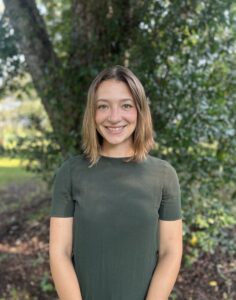
By Erica Cannon, Insure.ag Crop Insurance Agent
Most growers stay with the same crop insurance agent for a long time, and often that’s the right call. A relationship where someone knows your operation, your history and your practices is worth real money at claim time.
But plenty of growers stay put because they assume changing is difficult, or because they aren’t sure what better would even look like. Both of these situations have solutions, let’s dive into both.
What should a good crop insurance agent actually do?
Beyond writing the policy and hitting the deadlines, which is the floor rather than the standard:
Walk your fields. Not every block or field every year, but enough that the acreage on your policy reflects what’s actually planted. Coverage built off a form nobody has checked against the field is where disputes come from. It’s important for an agent to understand your fields and customize your policy to reflect this; do some fields have poor soil, does one field have a better wind break than others, does one field have a low spot or prone to erosion, specifics like this can come into play when choosing unit structures.
Tell you what you’re covered for in plain language. You should be able to say, out loud, what your policy does in a bad year. If you can’t, that’s not your failing.
Bring you the decision before the deadline, not the deadline itself. A reminder that the sales closing date is a couple days out is not advice. A conversation a month in advance about whether your coverage level still fits your operation, is.
Know your crop. Specialty crops carry specific provisions, types, practices and quality adjustment rules that don’t behave like row crops. An agent who writes mostly corn and beans is not automatically a wrong fit for your operation, but they should be able to demonstrate they know the difference.
Answer the phone in a bad week. This is the one growers actually judge on, and rightly. The value of an agent concentrates almost entirely into the few weeks a year when something has gone wrong. A good agent doesn’t wait for a producer’s call, they pay attention to weather events and are prepared for a bad week in order to open claims timely and offer support in the next steps.
Be honest when the answer is no. Not everything is claimable and not every idea is workable. An agent who tells you that early is worth more than one who lets you find out at adjustment.
What good service feels like
The easiest way to know whether you’re getting the most from your coverage is to notice what’s working. Growers with a strong agent relationship tend to recognize this list:
- Your acreage and production reports match your fields, because someone checked
- Deadlines arrive as conversations, with time to make a real decision
- When you had a loss, you had a guide through the process, not just a form to fill out
- When a crop or block seemed uninsurable, the next sentence was about a written agreement and what might be possible
- As your operation has grown and changed, your coverage has kept pace
- You ask a direct question and get a plain answer
That last one matters most. This business is complicated, but your understanding of your own coverage shouldn’t be. If most of this list sounds familiar, you’re in good hands, and that relationship is worth keeping. If it doesn’t, it’s not a crisis. It’s just useful information, and a good reason to have a conversation.
Should you switch?
A few honest counterpoints first, because switching is not free.
Your production history and records move with you, but the transfer needs doing properly and it takes attention. An agent who has worked your farm for fifteen years holds context that isn’t written down anywhere. And if your current agent is doing the job well, a better website is not a reason to move.
Switch when the service is failing you, when your operation has outgrown what your agent handles, or when you keep hitting the limits of what they’ll write. Don’t switch for a marginal premium difference. Federal crop insurance premiums are set by RMA, not by the agent, so anyone implying they can beat a rate on the same coverage is either confused or selling you something different from what you think.
A reminder that you are not shopping for price. You are shopping for the person who builds the policy and stands next to you at claim time.
The age of AI makes this more true, not less
We say this as an agency that uses AI every day. We analyze acres with aerial data and machine learning, and it makes the coverage we build sharper. So this is not a case against the technology. It is a case for knowing what it is for.
Americans have already drawn that line, and it lands almost exactly where crop insurance lives. Pew Research finds people welcome AI in analytical work: 74% back it for tasks like weather forecasting. The welcome ends where the human part begins. Half of Americans say AI will worsen people’s ability to form meaningful relationships, against 5% who think it will improve them. And half say the growing use of AI in daily life makes them more concerned than excited. One in ten say the reverse.
Insurance sits on the personal side of that line. In a February 2026 survey of more than 1,000 policyholders, only 22% said they would be comfortable with AI filing a claim, and just 16% would let it cancel or renew a policy. People will let a model crunch numbers all day. They will not hand it the decision that determines whether the farm has a bad year or a catastrophic one.
That instinct is correct. A model can price risk. It cannot walk your ground, sit at your kitchen table after a freeze, or push back on an adjuster. The years ahead will hand growers more dashboards and more automation, and some of it will be genuinely useful. What gets scarcer, and therefore more valuable, is a person who knows your operation and answers the phone in a bad week. Use the tools. Choose the person.
How do I change crop insurance agents?
The mechanics are more straightforward than most growers expect.
You can change agents at renewal. The practical anchor is your sales closing date. Make the move before it, and do it with room to spare rather than in the final week.
You’ll sign a transfer. Your new agent handles the paperwork to move the policy. You are not cancelling and starting over from nothing.
Your production history transfers with you. Your APH is yours. It follows the policy. Even if you are changing AIP’s.
You don’t have to have the awkward conversation first. Many growers do, and it’s a decent thing to do after a long relationship, but it isn’t a procedural requirement.
Check where you are in the crop year. Mid-season is more complicated than renewal, particularly with a claim open. If something is in progress, ask before you start moving pieces.
The single most common mistake is leaving it too late. Sales closing dates are fixed by RMA and nobody can extend them. Getting ahead of them protects the year ahead.
What to ask before you commit to anyone
Five questions worth asking any agent, including us:
- How many growers of my crop do you write?
- Who will actually handle my policy day to day, and who answers when they’re out?
- Walk me through what happens the day I call with a loss.
- When did you last submit a written agreement, and what happened?
- What would you change about how my coverage is set up right now?
Number five is the useful one. An agent who has looked at your situation will have an answer. An agent who is selling will change the subject.
Erica Cannon is a Crop Insurance Agent at Insure.ag, based in Moultrie, Georgia. Raised in rural central Florida surrounded by cattle and citrus, she earned a B.S. in Biology with a focus on plant science and genetics from the University of Central Florida, then began her career as a product developer for a vegetable seed dealer, running variety trials on tomatoes, peppers, watermelon, and brassicas across North Florida and South Georgia. In her crop insurance career she has developed a passion for serving underrepresented specialty crop policies, especially the complex ones that require a written agreement, and she still runs variety trials as a contract product developer to keep her field knowledge sharp. Outside of work, Erica is a lifelong competitive hunter jumper with two horses, Jackson and Charlie, and a plant collection more than 150 strong, ranging from cacti to exotics to fruit trees.
Insure.ag is a crop insurance agency built around specialty crops, with agents in Washington, California, Arizona and Georgia.
General information only, not a substitute for your policy documents. Transfer rules and deadlines vary by policy, crop and provider. Talk to your agent about your situation.