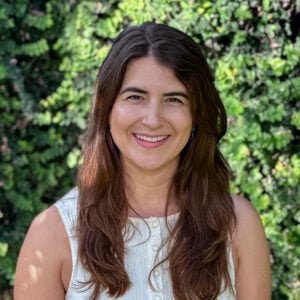
Insure.ag Head of Operations Kari Madden on what an AI-first operation actually looks like and why it makes us better for growers.
Adding AI to an established company is harder than it looks. You’re retrofitting, layering new technology onto processes and teams that were built long before any of it existed and then hoping efficiency follows. Most companies are in the middle of exactly that right now, and the results show how hard it is. By late 2025, nearly nine in ten companies had deployed AI in at least one business function, yet 94% said they weren’t seeing significant value from it, and only about 5% reported real financial returns. The technology mostly works, what keeps failing is the attempt to graft it onto everything that came before.
We are fortunate to never have had that problem, because we never had anything to graft it onto. We built the Insure.ag team with AI assumed from the start. I’ll be honest that the timing was partly luck, but what we did with that head start was a choice, and that’s the part I actually want to talk about. Nearly a year in, I’ve realized something. We didn’t build an AI company. We built a Farmer First company and used AI to protect the human part, not erase it.
It was never about replacing people
The fear is all over the headlines at the moment: AI shows up, and people get shown the door. I see it the other way around. We are not trying to replace people. We’re trying to clear up people’s availability to spend more human time: agents with growers, our ops team on the high-value analytical work and everyone doing more of the critical thinking and having the strategic conversations.
The research points the same way. MIT Sloan found that the overwhelming majority of AI-exposed jobs sit in what they call the augmentation zone, where AI handles specific tasks while people keep the judgment, the complexity, and the relationships. Only 3.3% of global employment falls into the highest-risk category. The World Economic Forum, looking further out, projects that AI will displace 92 million jobs by 2030 but create 170 million, a net gain of 78 million. The pattern isn’t that people get pushed out. It’s that the nature of their work moves up toward the things only people can do.
So that’s the bet we made: automate the repetitive admin that doesn’t need a person’s judgment on it, so our people have more room for the work that does.
The part that surprised me
I had my reservations going in, and they weren’t about my job. They were about my own thinking. I was concerned that AI would cause me to use my brain less, that it would take away the critical thinking side of my job. I’ve found it’s the exact opposite. I get to automate the mundane note-taking and admin, and spend so much more time on the stuff that’s actually real human value.
It’s a bigger point than it sounds. The work that burns people out usually isn’t the hard thinking, it’s the busywork stacked on top of it. Take that off the plate, and what’s left is closer to the reason most of us took the job in the first place.
How I decide what’s worth adopting
When a new tool comes up, I start with a question I think a lot of people skip. I always ask: what part of our process is actually struggling? Is it the process, or is it the tool? Because if it’s the process, no tool or AI prompt is going to fix it. A human has to make a decision.
We don’t treat AI as a magic wand. We treat it as a thought partner. As the Head of Operations, I’ll say: here’s the process, here’s what we’re stuck on, here’s what I’ve thought of, help me find the gaps. What am I missing?
The biggest lesson for me wasn’t a tool at all, it was that planning matters more than ever. AI has shown me how important it is to think through what you’re actually trying to solve before you start building. If you can’t come to an agreement on that, there’s no point even looking at a tool.
There’s a real shift underneath this, and it’s changed how we build. For years, the deal was simple: you were forced to pick a pre-built tool, and then bend your process to fit it. We could design a perfect task-management process, but if Asana didn’t let us do it, we’d have to change our process to match the tool’s capabilities. Now? None of the tools matched our process, so we’re building our own. That’s been feasible for about six months. It wasn’t before without significant software development infrastructure. The constraint used to be the software. Now it’s how clearly we understand what we actually want the work to do.
Why Claude, and why it matters in this business
Crop insurance is regulated, detailed, and unforgiving of errors, so the AI I trust in that environment can’t be a loose cannon. I really like that Claude respects the guardrails you give it. It’s been trained to follow the rules, and in crop insurance, that’s everything. When I tell it to do X, Y and Z, I can trust it’s more likely to actually do that and I’ve set mine up to give me a confidence level on every answer. Every single time, almost to the point of being far too stringent. But I’ll take that any day. In a business like this, a model that tells me how sure it is beats one that’s confidently wrong.
Where the machine stops and the person starts
We draw that line firmly, and on purpose. AI is relatively new, and its capabilities are changing weekly. We can’t just let it validate a policy and never touch it again. Every output still gets verified by a human. That’s the final check on policies and data, and I don’t see that changing anytime soon.
The same thinking shapes how we hire. AI raised the bar for us; it didn’t lower the headcount. AI is great at following precise instructions. What it can’t do is figure out which instructions to give, or judge whether the output is any good. That’s the human part. Specialty crops are full of exceptions to the rule, which is exactly why we’re hiring people who can think critically, not just execute.
We also take data security extremely seriously. Growers need to know they can trust us with their information.
What this means for the person in the field
We’ve spent six months in the sandbox with everyone experimenting, sharing small wins, finding what works for their role. Now we’re operationalizing it, and that’s where the real gains live. It echoes what McKinsey found across thousands of companies: the firms that capture value from AI aren’t the ones who experiment hardest, but the ones who redesign how the work actually flows. That’s the phase we’re entering now.
For growers, the payoff is simple to feel even when it’s invisible in the moment: faster, more accurate answers, backed by an added layer of checks, from an agent who has the time and headspace to actually talk to you.
I have one more goal, and this one’s personal. In this industry, it’s normalized to stay up until 2 a.m. the week before a sales closing deadline. That should not be normal. Not on our team. Rested, supported agents do better work, and growers feel the difference.
We set out to build a Farmer First company, and we used AI to protect the human part of it rather than erase it. Technology is a tool. The people it frees up to do their best work for you are the real story.